
Ralph’s Pursuit of Katharine
Night and DayThis flow follows Ralph Denham from an imagined ideal of Katharine Hilbery through rejection, self-questioning, and a more reciprocal commitment.
increasing Bearing strength in each event
 decreasing
Bearing strength in each eventdecreasingA Private Ideal

Katharine in the Imagination
The walk home
After leaving the Hilbery drawing-room, Ralph Denham replays the meeting and invents a Katharine who would admire and choose him. The imagined woman gives his otherwise constrained life a fresh source of excitement.
Fantasy as possession
He knows he is elaborating her qualities, yet he depends on the vision for comfort and direction. His pursuit begins as an inward story rather than a relationship between two people who know each other.
The Engagement News

A Lost Possibility
The family drawing-room
Ralph visits the Hilberys and learns that Katharine is engaged to William Rodney. He had mistaken his private hopes for a relationship with a future, and the news makes that difference painfully clear.
Collapse of the fantasy
Walking beside the river, he initially feels that his dreams have lost all reality. His recovery begins only when he recognizes that Katharine owed him no promise and that his own idealization belonged to him.
A Country Escape

Leaving the Profession
An apparent new direction
During a walk near Lincoln, Ralph tells Mary Datchet he intends to leave his legal work and live in the country. He frames the decision as a response to work that feels meaningless, though his explanation does not fully reveal the emotional crisis behind it.
The old ideal returns
A view of the landscape brings Katharine back into his imagination, showing that changing his surroundings has not freed him from the attachment. His plan becomes both a vocational decision and an effort to reorganize a life he cannot yet understand.
The Declaration at the River
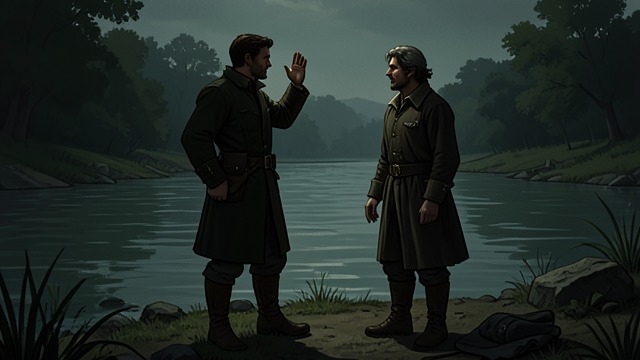
Speaking Plainly
A private confession
Ralph tells Katharine that he has made her his ideal and has built his thoughts around her without really knowing her. He admits that the attachment has influenced his plans, including his decision to leave law.
A difficult truth
Katharine challenges his imagined version of her, while Ralph insists that the feeling is real even if it contains illusion. Their exchange makes honesty a condition of further intimacy rather than a guarantee of agreement.
Recognition and Engagement
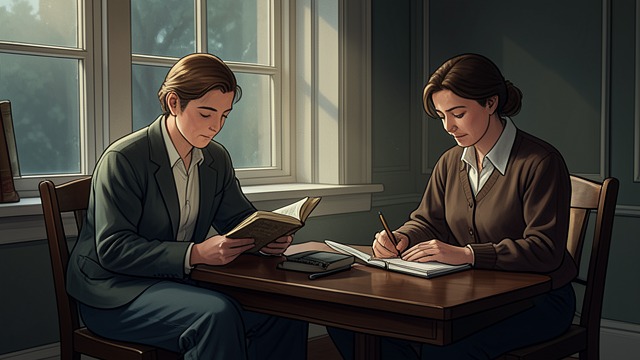
From Ideal to Partnership
Testing the vision
Ralph encounters Katharine in her family home and later shares his writing and her mathematical work with her. The exchange gives each a glimpse of the other’s private mind, beyond the public character each had imagined.
An imperfect union
They acknowledge love and become engaged while continuing to discuss their emotional lapses. Their ending does not erase the gap between ideal and reality; it gives them a reason to face that gap together.
after his first visit to Cheyne Walk
several weeks after their first meeting
at Christmas in Lincolnshire
after the Christmas visit
in the final chapters
